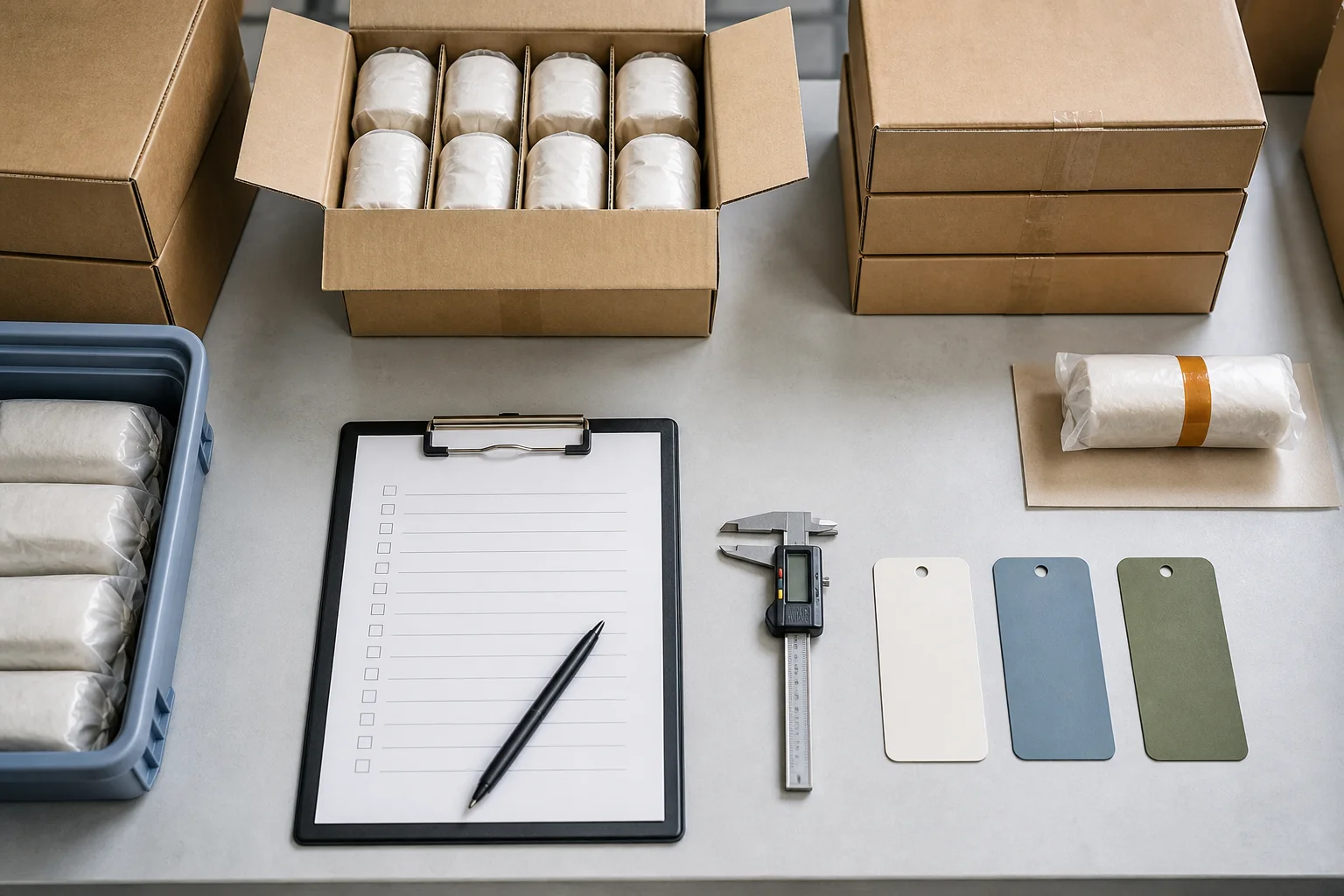
Start with the agreed inspection brief
An inspection report is most useful when findings can be compared against an agreed product, quantity, packaging and sampling brief. A defect described without that context may still need a buyer decision, but it should not be silently treated as either acceptable or unacceptable.
First, separate the report into findings, evidence and open questions.
1. Classify each finding
Use a decision table that keeps the underlying evidence visible:
| Finding | Affected scope | Agreed requirement | Evidence needed | Next decision |
|---|---|---|---|---|
| Product appearance | Photos or sample reference | |||
| Function or assembly | Test record or video | |||
| Packaging or labels | Carton or label photos | |||
| Quantity or assortment | Count or pack-out record |
Classify the operational consequence rather than relying on a generic label. For example: correct before release, confirm with buyer, or record as accepted variance.
2. Ask for a corrective-action record
If rework is proposed, ask the supplier to state:
- which units or cartons are affected;
- what correction will be made;
- what product or packaging reference is being used;
- when the correction will be complete;
- what evidence will be supplied after correction.
Do not assume a photo of one corrected item proves every affected unit was corrected. The required evidence depends on the scope of the finding and the buyer’s risk decision.
3. Decide whether to re-inspect
A re-inspection may be reasonable when a material finding affected multiple units, the corrective action changed the product or pack-out, or the buyer needs independent confirmation before authorising shipment.
For a limited, well-documented issue, the buyer may instead decide to accept the variance. Record that decision, its scope and who approved it. An inspection coordinator can organise the information and handoff; the buyer makes the release decision.
4. Keep release conditions explicit
Before shipment, state one of these outcomes for each material finding:
- correction verified and release approved;
- correction pending and shipment on hold;
- variance accepted by the buyer;
- further evidence or re-inspection required.
This reduces the risk of treating an unclear status as approval. It does not guarantee that every issue has been found or that delivery will proceed as planned.
Mon can coordinate a documented pre-shipment inspection brief, supplier follow-up and evidence handoff. Mon is not an inspection body and does not certify quality, compliance, delivery or final release.
Limits
Inspection scope, sampling and acceptance criteria must be agreed for the specific order. This article does not provide certification, legal conclusions or a guarantee that defects will be detected or corrected.
Common questions
Do you guarantee supplier quality or the lowest price?
Mon helps identify relevant suppliers, organize requirements, compare quotations and coordinate agreed sourcing stages, but does not guarantee the lowest price, supplier performance, product quality, certification, delivery or final project outcome.
What information do I need to start?
A short description and one useful reference—such as a product link, photo, model number, drawing or sample—is enough to begin the conversation. Detailed specifications, quantities, commercial requirements and confidential files can follow by email after initial contact.